
Regulatory Workstream

Goal: Provide a neutral forum for the evolution of the global regulatory environment by facilitating the advancement of regulatory science concepts, tools and policies that improve the effectiveness, efficiency and decision making of companies and regulatory agencies in the development of safe and effective medicines.
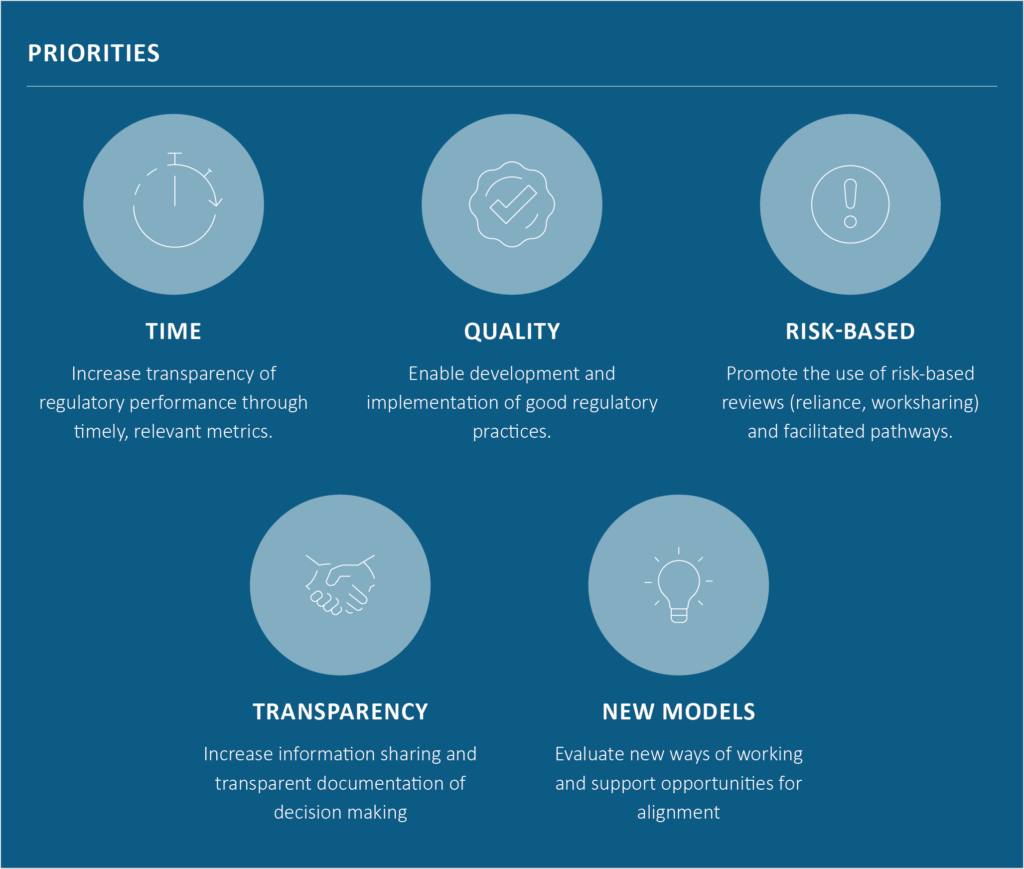
Find out more about our work and plans for 2025:

Download Research Agenda

Frequently asked questions (FAQs)

Regulatory science is the application of scientific principles and tools to develop regulatory frameworks and standards for assessing medicines. This supports regulators to make evidence-based decisions on medicine safety, efficacy, and quality.

CIRS advances regulatory science by conducting collaborative research and bringing regulatory stakeholders together to identify and implement best practices.

Performance of regulatory systems is measured using structured tools that assess efficiency, quality, and transparency. The World Health Organization Global Benchmarking Tool (GBT) evaluates regulatory systems against international standards, supporting capacity building and system maturity.

CIRS complements this with its Optimising Efficiency in Regulatory Agencies (OpERA) toolkit, which can use regulatory review process metrics to benchmark performance across regulatory agencies. More information on how CIRS OpERA tools support WHO GBT indicators can be found in R&D Briefing 87.

Regulatory agencies face several challenges when implementing risk-based reviews (see CIRS July 2022 workshop), including:

  • Internal alignment and mindset shifts: Adopting reliance-based approaches often requires cultural change and buy-in from reviewers accustomed to traditional methods.
  • Access to high-quality documentation: Agencies need timely, complete, and secure access to reference agency reports, which can be limited by redaction practices or inconsistent formats.
  • Infrastructure and capacity: Implementing scalable and transparent risk-based frameworks demands robust systems, clear guidelines, and trained personnel.
  • Trust and collaboration: Building confidence in external assessments and fostering collaboration across agencies is essential but can be hindered by regulatory sovereignty and differing standards.

CIRS supports regulatory agencies with navigating the practical implementation of risk-based reviews, such as reliance and worksharing, through its Optimising Efficiencies in Regulatory Agencies (OpERA) programme, workshops and research projects.